Many people feel anxious after seeing an IQ score slightly below 100. One of the most common questions is: Is an IQ of 95 bad?
The short answer is no—an IQ of 95 is not bad at all. In fact, it falls well within the normal, healthy range of human intelligence.
To understand what an IQ score of 95 truly means, it’s important to look beyond the number and understand how IQ works, what it measures, and—just as importantly—what it does not measure.
What Does an IQ Score of 95 Mean?
IQ scores are standardized so that 100 represents the average intelligence level of the general population. Most people score close to this number, not far above or below it. Because of this design, small differences in IQ scores are common and expected.
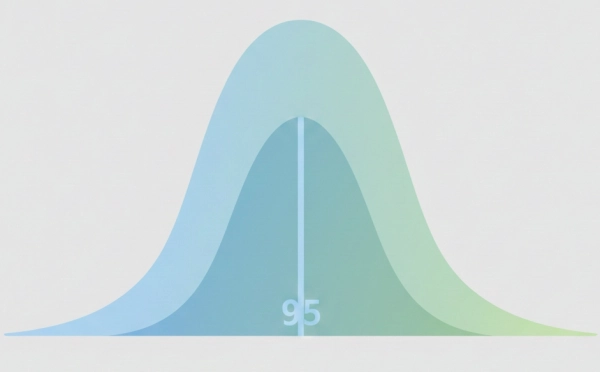
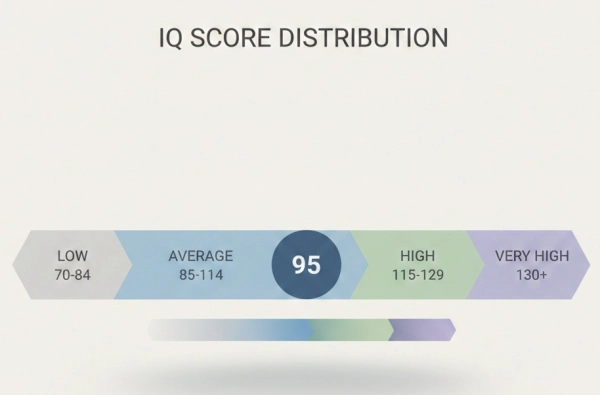
An IQ score of 95 falls within the average intelligence range, sitting slightly below the statistical mean but still well inside what psychologists consider normal cognitive functioning. In practical terms, this score places you among a very large portion of the population, not at the lower end of intelligence.
IQ Classification
To better understand where a score of 95 fits, here is a commonly used classification scale:
- 130 and above – Gifted / Very High
- 115–129 – Above Average
- 100–114 – Average
- 85–99 – Average (lower end)
- 70–84 – Below Average
- Below 70 – Significantly Below Average
With an IQ of 95, you are firmly within the average range, alongside millions of people who function normally in education, work, and daily life.
Is 95 Considered Low Intelligence?
No.
An IQ score of 95 does not indicate low intelligence, intellectual disability, or cognitive impairment.
Individuals with an IQ around 95 typically:
- Learn at a normal pace in school or training environments
- Perform well in a wide variety of professions
- Understand instructions and abstract concepts without difficulty
- Solve everyday problems effectively
- Adapt to new situations, technologies, and challenges
From a real-world perspective, the difference between an IQ of 95 and 100 is very small and often completely unnoticeable in daily interactions, job performance, or academic tasks.
Why an IQ of 95 Can Feel “Low” to Some People
Many people feel disappointed by a score below 100 because of a common misconception:
- 100 is wrongly seen as the minimum level for being “smart”
- Anything below 100 is assumed to be “bad” or below normal
This belief comes from a misunderstanding of how IQ statistics work.
IQ scores follow a bell curve, which means:
- Most people score between 85 and 115
- Scores near 100 are extremely common
- A score of 95 represents normal variation, not a problem
Additionally, small score differences—often 5 to 10 points—can easily be influenced by factors unrelated to true intelligence, such as:
- Stress or anxiety during the test
- Fatigue or lack of sleep
- Time pressure
- Distractions
- Unfamiliar question styles or formats
Because of this, a score of 95 could easily be a 100 or higher under different conditions.
What an IQ of 95 Does Not Say About You
It is important to understand the limitations of IQ testing. An IQ score does not measure many abilities that are critical for success in life.
An IQ test does not evaluate:
- Creativity or original thinking
- Emotional intelligence (EQ)
- Social and communication skills
- Motivation and ambition
- Work ethic and discipline
- Leadership ability
- Artistic or musical talent
Many highly successful individuals likely fall within the 90–100 IQ range, yet excel because they develop strong emotional intelligence, communication skills, persistence, and real-world experience.
Can Someone With an IQ of 95 Be Successful?
Absolutely.
Research consistently shows that once a person reaches average intelligence, factors such as emotional intelligence, discipline, adaptability, and learning habits become far more important predictors of long-term success than IQ alone.
People with an IQ of around 95 succeed every day as:
- Teachers
- Business owners and entrepreneurs
- Engineers and technicians
- Nurses and healthcare professionals
- Managers and team leaders
- Artists and designers
- Skilled tradespeople
Success is not reserved for those with exceptionally high IQ scores. It is shaped by skills, habits, effort, and mindset over time.

IQ Is Not Fixed
Another key point to remember is that IQ is not a permanent label.
While genetics influence cognitive ability, measured IQ can change depending on:
- Education and learning strategies
- Practice with logic and problem-solving tasks
- Mental stimulation and training
- Physical health, sleep quality, and stress levels
- Familiarity with test formats
Many people score higher on later IQ tests simply because they better understand how the questions work and how to manage their time.
The Bottom Line
So, is an IQ of 95 bad?
No. It is normal, healthy and common.
An IQ of 95 means:
- You have average cognitive ability
- You are fully capable of learning, adapting, and solving problems
- Your opportunities and potential are not limited by this score
IQ is only one small piece of the intelligence puzzle. How you think, learn, communicate, and apply your abilities in real life matters far more than a single number on a test.

Comments
Share Your Thoughts