In today’s fast-paced and complex business environment, technical expertise alone is no longer enough. The leaders who thrive are those who can connect deeply with people, manage emotions wisely, and make decisions that balance logic with empathy. This is where emotional intelligence in leadership — often called “EI” or “EQ” — becomes a defining factor. Leaders with high emotional intelligence can inspire trust, navigate conflict, and motivate teams even under pressure.
This article explores what emotional intelligence means in a leadership context, why it matters, its key components, and actionable ways to strengthen it.

What Is Emotional Intelligence in Leadership?
Emotional intelligence (EI) refers to the ability to recognize, understand, and manage one’s own emotions — as well as those of others. In leadership, emotional intelligence shapes how a person communicates, resolves conflict, and inspires people. It determines whether they can stay calm under stress, empathize with their team, and guide others through uncertainty. Research consistently shows that emotionally intelligent leaders build more engaged, loyal, and productive teams than those who rely on authority alone.
Why Emotional Intelligence Matters in Leadership
Emotional intelligence in leadership is one of the strongest predictors of long-term success — often more important than technical skills or IQ. Leaders with high emotional intelligence don’t just manage tasks; they manage emotions, relationships, and the invisible energy that drives a team forward. When a leader understands both their own emotions and those of others, they create an atmosphere where people feel safe, respected, and motivated, with a direct impact on productivity, morale, and retention.
1. Higher Employee Engagement
Employees are far more engaged when they feel seen and valued. Emotionally intelligent leaders recognize achievements, offer meaningful feedback, and foster trust. This connection builds loyalty and reduces turnover — a critical advantage in competitive industries.
2. Better Communication
Great communication goes beyond words. Leaders with emotional intelligence read body language, tone, and emotional subtext. They tailor their message based on how others feel, ensuring understanding rather than confusion or resistance.
3. Stronger Conflict Resolution
Conflicts are inevitable in any organization. Emotionally aware leaders identify emotional triggers on both sides and guide discussions toward mutual understanding, not blame. This skill helps transform tension into teamwork.
4. More Innovation and Creativity
A psychologically safe workplace encourages people to share ideas without fear of judgment. When leaders show empathy and openness, they inspire creative risk-taking and continuous improvement — essential qualities for innovation.
5. Resilience During Crises
In times of uncertainty, emotions run high. Leaders with strong emotional intelligence remain calm, centered, and decisive. Their emotional steadiness helps teams navigate change with confidence, maintaining morale and focus when it matters most.
The Five Core Components of Emotional Intelligence in Leadership
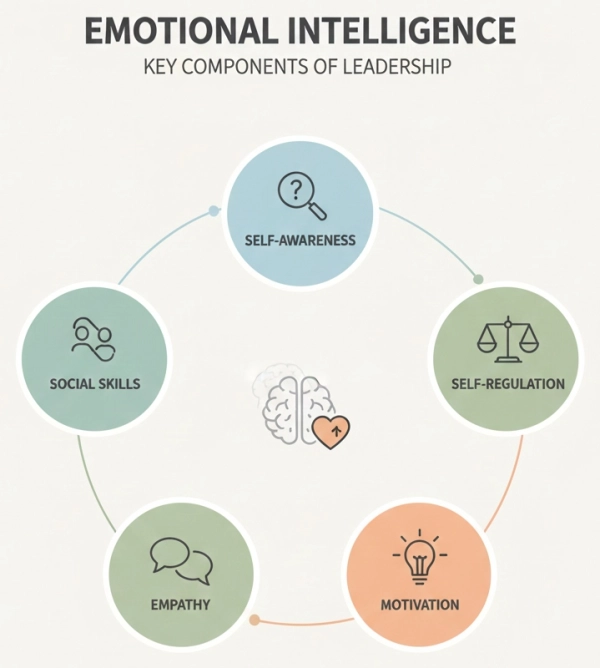
Psychologist Daniel Goleman, who popularized the concept of emotional intelligence, identified five essential competencies that define emotionally effective leadership.
1. Self-Awareness
Self-awareness is the cornerstone of emotional intelligence. Leaders who understand their own emotions, strengths, and limitations make better decisions. They recognize how their behaviour affects others and use this insight to lead with honesty and integrity.
2. Self-Regulation
Leadership often involves pressure and unpredictability. Self-regulation allows leaders to manage their impulses, stay composed, and respond thoughtfully rather than react emotionally. This emotional discipline creates stability and earns respect from others.
3. Motivation
Truly effective leaders are driven by purpose, not just personal gain. Their motivation stems from a deep internal drive — to achieve excellence, make a difference, or fulfil a mission. This intrinsic energy inspires teams to share the same commitment.
4. Empathy
Empathy is the bridge between authority and trust. It allows leaders to understand the emotions, perspectives, and needs of others. Empathetic leadership builds psychological safety — a culture where people feel heard, supported, and willing to contribute their best.
5. Social Skills
Social intelligence is where emotional awareness becomes action. Leaders with strong social skills communicate clearly, build networks, resolve conflict gracefully, and motivate people toward a shared vision. They’re not just managers — they’re connectors.
How Emotional Intelligence Affects Leadership Outcomes

The influence of emotional intelligence in leadership extends far beyond an individual leader’s personality — it fundamentally shapes how an organisation performs, evolves, and sustains success.
1. Improved Team Performance
Teams led by emotionally intelligent leaders consistently outperform those led by individuals who rely solely on authority. Such leaders inspire confidence, promote collaboration, and recognize individual strengths — leading to higher engagement and measurable productivity gains.
2. Lower Turnover Rates
One of the biggest drivers of employee retention is how people feel about their leaders. When employees feel emotionally supported and valued, they’re more likely to remain loyal and grow within the organisation. Leaders with high emotional intelligence build this sense of belonging through empathy, fairness, and genuine appreciation.
3. Positive Workplace Culture
Leaders who demonstrate empathy and self-awareness model respectful communication, encourage openness, and invite diverse perspectives. Over time, this creates a culture of trust and psychological safety — where people feel free to innovate without fear of criticism or failure.
4. Effective Crisis Management
Emotionally intelligent leaders remain calm, rational, and empathetic under pressure. They communicate transparently, make balanced decisions, and reassure their teams through stability and compassion. Their ability to regulate emotions prevents panic and guides the organisation through uncertainty with clarity.
5. Enhanced Reputation and Influence
Leaders known for emotional balance, integrity, and compassion naturally earn respect from colleagues, clients, and stakeholders. This emotional credibility strengthens both personal and organisational reputation, turning authority into genuine influence.
Developing Emotional Intelligence as a Leader
The encouraging truth about emotional intelligence is that it’s not fixed — it can be learned, practised, and refined over time. Key strategies include practising regular reflection on your emotional responses after high-pressure situations; seeking constructive feedback from colleagues and mentors; pausing before reacting to conflict or stress; cultivating empathy through active listening and observing non-verbal cues; building authentic relationships through transparency and a willingness to admit mistakes; and investing in leadership coaching to uncover blind spots and develop strategies for managing complex emotional dynamics.
The goal is not to suppress emotions, but to channel them productively toward better decisions, stronger relationships, and sustainable leadership success.
Real-World Examples of Emotional Intelligence in Leadership
Some of the world’s most respected leaders attribute their success not to intellect alone, but to emotional intelligence. Barack Obama is widely recognised for his composure and empathy in decision-making, especially under pressure. Satya Nadella is credited with transforming Microsoft’s culture through empathy and emotional awareness. And Jacinda Ardern led New Zealand through multiple crises with compassion and decisive emotional strength. These examples show that emotional intelligence isn’t “soft” — it’s a genuine competitive advantage.
Conclusion
In the modern workplace, emotional intelligence in leadership is not optional — it’s essential. IQ may determine how well you analyse problems, but EQ determines how well you lead people. The best leaders blend rational clarity with emotional depth, balancing vision with understanding. By cultivating emotional intelligence, you don’t just improve your leadership — you transform your team, your organisation, and the way people experience success under your guidance.
Want to assess your own emotional intelligence? Take our free EQ Test and discover where your emotional strengths and growth opportunities lie.

Comments
Share Your Thoughts