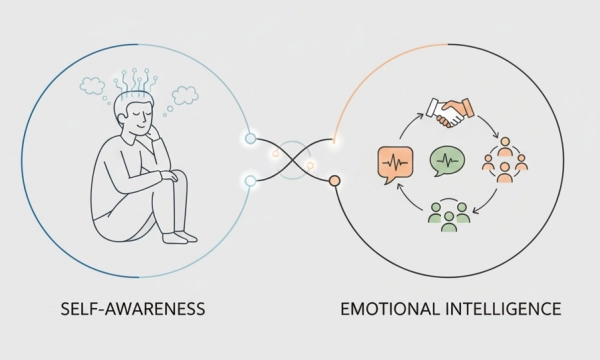
In an era where soft skills increasingly determine success, two qualities stand out: emotional intelligence (EI) and self-awareness. While emotional intelligence refers to your capacity to understand and manage emotions — both your own and others’ — self-awareness is the foundational skill that enables this understanding. Without knowing yourself, your emotional intelligence remains limited. This article explores how emotional intelligence and self-awareness interrelate, why they matter, and how you can develop them to advance both personal growth and professional leadership.
What Is Emotional Intelligence?
Emotional intelligence (also called EQ) is your ability to recognize, understand, and manage emotions — your own and other people’s — and to use this emotional knowledge to guide behaviour, relationships, and decision-making. Effective emotional intelligence contributes to better teamwork, stronger leadership, and greater resilience under stress. For practical insights, explore our Emotional Intelligence Test.
What Is Self-Awareness?
Self-awareness is the ability to tune into your internal state: your emotions, values, strengths, weaknesses, motives, and how they impact your thoughts, behaviours, and relationships. It is typically broken into two layers: internal self-awareness (understanding your inner feelings, thought patterns, values, and how they influence your behaviour) and external self-awareness (recognizing how others perceive you and the impact your behaviour has on them). Self-awareness is not simply introspection — it’s accurate, honest self-reflection that allows you to act, rather than react, in line with your values.
Why Emotional Intelligence and Self-Awareness Go Together
Self-awareness is widely recognized as the cornerstone of emotional intelligence. It forms the foundation upon which all other emotional and social competencies are built. Without understanding your own emotions, motivations, and behavioural patterns, it becomes nearly impossible to manage your reactions, empathize with others, or navigate complex interpersonal dynamics effectively.
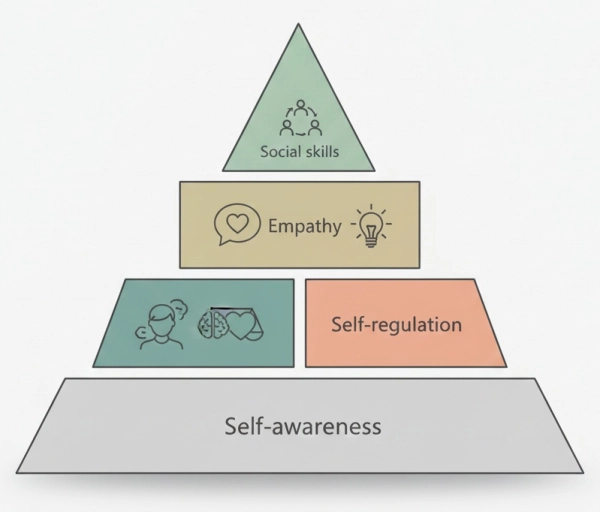
According to Korn Ferry, self-awareness is the “gateway competency” of emotional intelligence because it allows individuals to accurately perceive how their inner emotional states influence external behaviour, decision-making, and relationships. Leaders and professionals who cultivate self-awareness tend to exhibit greater authenticity, emotional balance, and resilience in the face of challenges.
In simple terms: self-awareness means asking “What am I feeling? Why am I feeling this way? What drives my behaviour in this situation?” Emotional intelligence then takes that awareness and uses it to guide choices — responding thoughtfully rather than reacting impulsively. When you strengthen self-awareness, the other components of emotional intelligence — self-regulation, empathy, motivation, and relationship management — naturally become more effective.
Core Components of Emotional Intelligence Where Self-Awareness Plays a Central Role
Emotional intelligence, as outlined by psychologist Daniel Goleman, is composed of five interconnected competencies. Self-awareness stands as the central pillar that influences and sustains the rest.
1. Self-Awareness
Recognizing your emotions, values, and internal triggers, and understanding how they shape your thoughts, behaviours, and interactions. Individuals with strong self-awareness can align their actions with their core principles, maintain consistency in their decisions, and adjust their approach based on situational demands.
2. Self-Regulation
Once you are aware of your emotions, you can manage them constructively — controlling impulses, maintaining composure under pressure, and adapting to change without losing focus. Effective self-regulation depends entirely on how accurately you perceive your emotional state in the first place.
3. Motivation
Self-aware individuals draw motivation from intrinsic goals and values rather than external rewards. They have a clear sense of purpose, enabling them to persist in the face of obstacles and maintain enthusiasm even when challenges arise.
4. Empathy
Empathy begins with understanding yourself. When you’re attuned to your own emotions, it becomes easier to recognize and interpret the emotions of others — forming the foundation for compassion, active listening, and effective communication.
5. Social Skills & Relationship Management
Applying self-awareness and empathy allows you to build trust, manage conflict, and lead with emotional authenticity. Leaders who are self-aware are more likely to inspire confidence, foster collaboration, and maintain strong professional relationships.
Practical Benefits of Integrating Emotional Intelligence and Self-Awareness
When cultivated together, emotional intelligence and self-awareness produce benefits that are both practical and far-reaching.
Improved decision-making: Emotionally intelligent, self-aware individuals can recognize when their judgements are being influenced by temporary emotions, stress, or bias. This recognition creates space to pause, reflect, and respond rather than react — producing better, more balanced decisions, particularly in high-pressure situations.
Stronger and more authentic relationships: Self-awareness helps you understand your emotional patterns, communication style, and how your behaviour affects others. Combined with emotional intelligence, it enables more open communication, active listening, and empathetic responses that build trust over time.
Better stress and conflict management: High emotional intelligence allows you to manage emotional triggers before they escalate. Paired with self-awareness, you can identify early signs of stress or frustration, regulate your response, and maintain composure in challenging situations.
Increased self-confidence and clarity of purpose: Self-awareness brings clarity about your values, motivations, strengths, and weaknesses. Emotional intelligence then channels that clarity into action — reducing internal conflict, boosting confidence, and enhancing long-term motivation.
Higher overall performance and satisfaction: Research consistently links emotional intelligence and self-awareness to higher job performance, leadership effectiveness, and personal well-being. For those interested in how emotional and cognitive abilities interact, our complete guide to IQ can add helpful context.
Common Barriers to Developing Self-Awareness and Emotional Intelligence
Many people assume they are already self-aware, yet research suggests otherwise — studies from Harvard Business Review show that only 10–15% of people demonstrate genuine self-awareness, even though the majority believe they possess it. Common barriers include lack of introspection in today’s fast-paced world; confirmation bias that prevents honest self-evaluation; emotional avoidance or suppression rather than acknowledgement; lack of deliberate reflection structures such as journaling or feedback; and overemphasis on how others behave while neglecting one’s own reactions.
How to Strengthen Self-Awareness and Emotional Intelligence
Emotional intelligence and self-awareness are not fixed traits — they can be developed and strengthened with consistent practice and honest feedback.
1. Practice Regular Reflection
Taking time daily or weekly to think about your emotional experiences helps you recognize recurring patterns and triggers. Ask yourself: What emotions did I feel today and why? How did I react under stress? What could I have done differently? These brief self-audits, even for five minutes a day, foster emotional clarity and help transform impulsive reactions into thoughtful responses.
2. Keep a Thought or Emotional Journal
Writing is one of the most powerful ways to observe yourself objectively. By keeping a journal of your emotions, thoughts, and behavioural responses, you can identify patterns that may otherwise go unnoticed — for example, discovering that certain environments or situations repeatedly trigger frustration. Over time, journaling builds a tangible record of your emotional growth.
3. Seek Honest and Constructive Feedback
True self-awareness cannot develop in isolation. Seeking feedback from trusted friends, mentors, or colleagues allows you to see yourself through others’ eyes, often revealing blind spots you weren’t aware of. Ask open-ended questions such as: How do you perceive my communication style? When I’m under pressure, how does my behaviour affect others? Receiving feedback may be uncomfortable, but it is one of the most transformative practices for emotional growth.
4. Cultivate Mindfulness and Body Awareness
Mindfulness trains your brain to stay present, notice thoughts without judgement, and manage emotional responses before they become overwhelming. Simple exercises — focusing on your breath, observing physical sensations like tension, or grounding yourself when emotions rise — help you reconnect with your body’s early warning signals and strengthen the neural pathways that support emotional regulation.
5. Apply the Emotional Pause Before Reaction
When you feel triggered, take a brief moment before responding and ask yourself: What emotion am I feeling right now? Why am I feeling it? What response will serve me and the situation best? This deliberate pause is the hallmark of emotional intelligence — transforming impulsive reactions into intentional actions that improve communication, conflict resolution, and decision-making.
6. Map Your Values, Strengths, and Weaknesses
Take time to define your core values (what truly matters to you), your strengths (what you naturally do well), and your growth areas (where emotions tend to cloud judgement). Document these insights and revisit them every few months. This exercise builds consistency between your values, actions, and long-term goals.
7. Build Support Systems: Coaching, Mentorship, and Peer Learning
Growth accelerates when supported by others. Working with a coach, therapist, or emotionally intelligent peer group provides valuable external perspectives and accountability. Structured support ensures that self-awareness and emotional intelligence become lasting habits rather than short-term insights. For additional personal insight, taking our EQ Test or our free IQ test guide can help you understand your emotional and cognitive tendencies more clearly.

Real-World Application: Self-Awareness + EI in Leadership and Teams
In organisational settings, leaders who integrate self-awareness and emotional intelligence set the tone for a culture of trust, compassion, and high performance. They recognize that their emotional state affects team morale, decision-making, and communication. For example, a leader aware of their frustration in a meeting can articulate it openly rather than letting unacknowledged emotion create tension. Organisations that train and measure EI and self-awareness often see reduced conflict, improved retention, and more resilient, adaptive teams.
Conclusion
Emotional intelligence and self-awareness are not separate skills — they are deeply interconnected. Self-awareness is the gateway to true emotional intelligence. When you understand your emotions and values, you can regulate your behaviour, empathize with others, build genuine relationships, and lead with clarity and purpose.
In a world where human connection, adaptability, and emotional insight matter more than ever, developing both self-awareness and emotional intelligence is one of the most strategic investments you can make — for personal growth, leadership effectiveness, and life meaning. Take our free EQ Test to discover where your emotional strengths lie today.

Comments
Share Your Thoughts