Chess has long been seen as a game for geniuses — a battlefield of logic, strategy, and foresight. But can playing chess actually increase your IQ? The answer lies in how the game challenges your brain. Chess activates memory, concentration, creativity, and problem-solving skills all at once, stimulating both sides of the brain. In this article, we’ll explore the science behind chess and intelligence, what studies reveal about its cognitive benefits, and how regular play can make your mind sharper, more focused, and more adaptable. If you’re curious about how IQ works, see our full guide on what IQ really measures.
What Makes People Believe Chess Increases IQ?
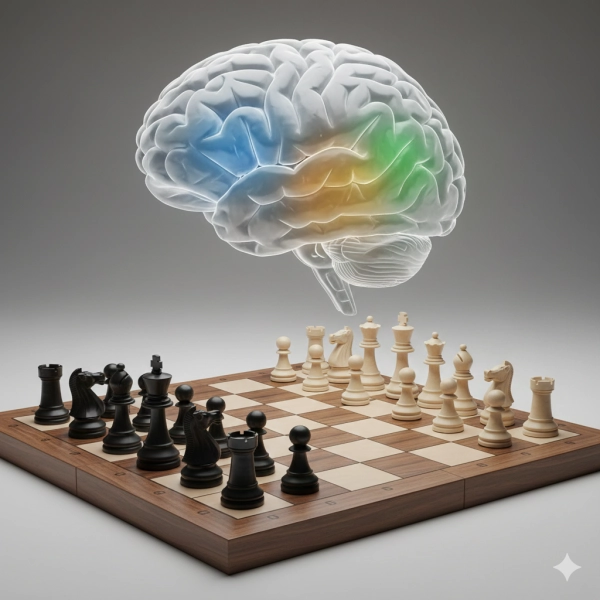
For centuries, chess has been considered the ultimate game of intellect — played by scholars, strategists, and world leaders. The idea that chess can increase IQ comes from its demand for deep concentration, critical thinking, and complex problem-solving, all of which engage multiple regions of the brain. Many of these mental abilities overlap directly with what’s evaluated in standard IQ tests. Chess isn’t just a pastime; it’s a mental workout that has led researchers and educators to explore whether regular play can truly raise cognitive performance — including those discussed in our article on how to improve cognitive skills.
What Research Says: Can Chess Actually Increase IQ?
Scientific studies provide mixed but insightful answers. While chess doesn’t directly “add points” to your IQ, it does enhance cognitive abilities that IQ tests measure — such as reasoning, memory, and decision-making.
A study by Dr. Adrian de Groot found that expert chess players rely on pattern recognition and memory more than innate IQ, suggesting that training the brain through chess can simulate higher intellectual performance. Research published in Intelligence Journal (2016) found that school children who practised chess regularly improved in math and reading — areas closely linked to fluid and crystallized intelligence. Neuroimaging studies also show that chess activates both hemispheres of the brain: logical reasoning in the left hemisphere and creative visualisation in the right. So while playing chess may not permanently “boost your IQ score,” it sharpens mental functions that contribute to higher cognitive performance.
How Chess Stimulates the Brain
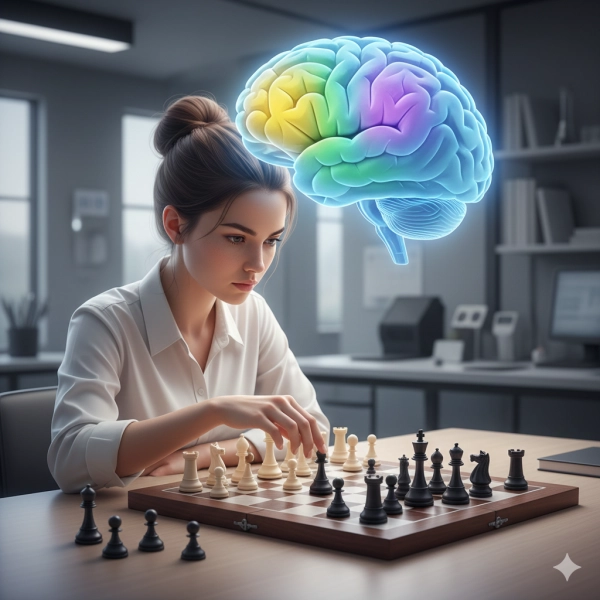
Chess is more than just a game — it’s a powerful mental exercise that activates nearly every region of the brain responsible for complex thinking, creativity, and memory. Neuroscientists often describe chess as a “full-brain workout” because it challenges both the left hemisphere (logic, analysis, reasoning) and the right hemisphere (creativity, visualisation, intuition) simultaneously.
1. Problem-Solving and Strategic Thinking
Every move in chess represents a complex decision that impacts the entire game. You must anticipate multiple possibilities, evaluate risks, and develop long-term strategies under pressure. This constant mental juggling strengthens your executive functions — the same cognitive processes responsible for planning, decision-making, and goal setting — helping you become a more analytical thinker in everyday life.
2. Memory and Pattern Recognition
Skilled chess players rely on exceptional memory — recalling opening sequences, previous games, tactical patterns, and opponent tendencies. This continuous reinforcement builds both working memory (holding and manipulating information short-term) and long-term memory (storing patterns for future use). Brain scans show that expert players activate the hippocampus and frontal cortex, both associated with memory and pattern learning.
3. Concentration and Attention Span
Chess demands unwavering focus. A single lapse in attention can cost you the game. With practice, this level of concentration transfers to other areas of life — improving your ability to stay focused on tasks, resist distractions, and maintain mental stamina. Chess essentially trains your brain to sustain attention under challenging conditions.
4. Creativity and Imagination
Although chess is rooted in logic, it also sparks imagination. Great players visualise multiple future positions, anticipate outcomes, and devise innovative strategies. This creative process engages the right hemisphere, fostering divergent thinking — the ability to generate original ideas and alternative solutions. Many artists, writers, and scientists credit chess with helping them think outside the box.
5. Cognitive Flexibility
No two chess games are ever the same. Every match requires you to adapt to new scenarios, counter your opponent’s strategy, and rethink your plan in real time. This dynamic nature develops cognitive flexibility — the brain’s ability to switch between different modes of thinking quickly and efficiently, a skill essential for solving complex real-world problems.
6. Emotional Regulation and Patience
Beyond cognitive benefits, chess trains emotional intelligence. Players learn to stay calm after mistakes, manage frustration, and think rationally under pressure. This emotional control enhances resilience and patience — qualities that extend far beyond the chessboard.
Does Chess Help Children Develop Higher IQs?
Yes — but in a very specific and scientifically grounded way. Chess doesn’t magically make children geniuses overnight, but it plays a powerful role in developing the cognitive foundations that IQ tests measure: reasoning, problem-solving, pattern recognition, and memory. A well-known study from Venezuela’s Ministry of Education observed thousands of students who received chess instruction as part of their curriculum. After just four months of consistent chess lessons, average IQ scores showed measurable improvement — the result of improved thinking flexibility, pattern learning, and strategic reasoning, not rote memorisation.

Chess helps children by enhancing logical reasoning and abstract thinking (thinking several steps ahead and weighing consequences), improving focus and academic performance in math, science, and reading, building patience and emotional control, developing metacognitive skills (thinking about how they think), and encouraging creativity and imagination. Because of these benefits, many educational systems worldwide now integrate chess into school programmes, nurturing both intellectual growth and emotional intelligence.
Chess and Adult Brain Health
The mental rewards of chess don’t end with childhood. For adults and older individuals, chess serves as a powerful tool to maintain cognitive vitality and protect the brain from age-related decline. Engaging in complex, stimulating activities like chess helps keep neural circuits active and encourages neuroplasticity — the brain’s ability to reorganise and form new connections. A 2019 study published in Frontiers in Aging Neuroscience found that mentally engaging activities, including chess, delayed the onset of dementia symptoms by preserving grey matter in key cognitive regions. Regular players also exhibit better memory retention, faster decision-making, and greater emotional control compared to non-players.
How to Use Chess to Improve Cognitive Skills
The secret isn’t about becoming a grandmaster — it’s about how consistently and consciously you engage with the game.
1. Play Regularly and Consistently
Frequency matters more than duration. Even short, focused games a few times a week stimulate the brain’s problem-solving and pattern-recognition centres. Vary your play — online blitz games for quick thinking, and longer matches for deep analysis.
2. Analyse Your Games Thoughtfully
The greatest improvement comes after the match. Reviewing your moves — especially mistakes — teaches you to evaluate decisions objectively and refine critical thinking. Ask yourself: Why did I lose this position? What could I have done differently? Was my plan sound, or was I reacting emotionally? Chess engines and annotated games can provide deeper insights.
3. Study Strategies and Tactics
Learning openings, middlegame tactics, and endgame principles helps you recognise recurring patterns — an essential skill for both chess and real-life problem-solving. Start with classic tactics like forks, pins, and discovered attacks, then move on to positional play and pawn structure.
4. Challenge Stronger Opponents
Improvement thrives in discomfort. Playing against stronger opponents pushes you to think harder, adapt faster, and recognise weaknesses in your strategies. Don’t get discouraged by losses — as Garry Kasparov observed, every defeat contains its own lesson if you are open to learning.
5. Combine Chess with Other Brain Activities
Complement chess with reading non-fiction to improve reasoning, solving logic puzzles or Sudoku to enhance pattern recognition, and learning a new language or musical instrument to expand memory and creativity. This balanced approach keeps your brain flexible and prevents mental fatigue from repetitive focus.
6. Cultivate a Growth Mindset
Treat chess as a journey, not a competition. Approach each game with curiosity rather than fear of failure. The process of learning — analysing mistakes, recognising progress, and staying patient — builds emotional resilience and self-awareness, both critical aspects of long-term intelligence growth.
Final Thoughts
So, does chess increase IQ? The most accurate answer is: not directly — but profoundly. Chess enhances the core mental abilities that IQ tests measure: logical reasoning, problem-solving, memory, focus, and adaptability. Whether you’re a curious beginner or a seasoned competitor, playing chess regularly strengthens cognitive function, sharpens decision-making, builds mental discipline, and enhances creativity and self-control.
In the end, chess doesn’t just make you more intelligent — it makes you strategic in thought, composed in action, and aware in life. If you’re interested in understanding where you stand cognitively, take our free IQ test with instant results. And explore more evidence-based articles in our IQ Guides collection.

Comments
Share Your Thoughts