IQ testing is a topic that often raises questions and concerns for parents. Many wonder what these tests actually measure, whether the results are meaningful, and how they should be used to support a child’s learning. Understanding the purpose and limitations of IQ testing can help parents make informed, balanced decisions. A helpful starting point is IQ testing for kids: what parents should know, which provides an overview of why and how these tests are used.
What Is an IQ Test?
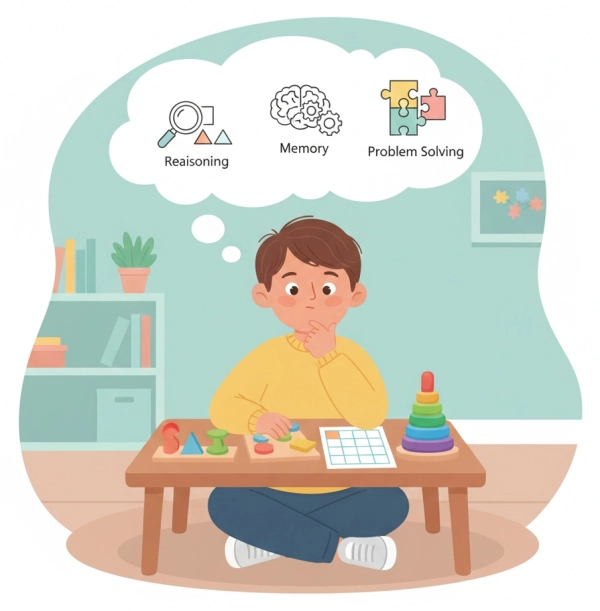
An IQ (Intelligence Quotient) test is a standardized assessment designed to evaluate certain cognitive skills under structured conditions. In children, these skills typically include:
- Logical and abstract reasoning
- Pattern recognition and problem solving
- Verbal comprehension and language-based reasoning
- Working memory and short-term information processing
- Processing speed and attention to detail
IQ tests are carefully developed to measure how efficiently a child performs specific mental tasks—not how intelligent or capable they are overall. For a deeper explanation of what IQ really represents, parents can refer to what is IQ – a complete guide to intelligence quotient.
Importantly, IQ tests do not measure overall intelligence, creativity, personality, motivation, or potential for success. Instead, they provide a snapshot of how a child performs on a narrow set of cognitive tasks at a particular moment in time.
Modern IQ tests for children are age-normed, meaning a child’s score is compared only to others in the same age group. This is especially important during childhood, when cognitive abilities can change rapidly from year to year.
Why IQ Tests Are Used for Children
IQ testing is sometimes used in educational, clinical, or research settings to support understanding—not to label or limit a child.
Common reasons IQ tests may be used include:
- Gaining insight into a child’s learning style and cognitive profile
- Identifying relative strengths and areas that may need support
- Informing educational planning or classroom accommodations
- Supporting decisions about enrichment or additional learning resources
- Providing context alongside academic performance and teacher observations
When used responsibly, IQ tests complement—not replace—academic performance, classroom observations, and developmental history. This balanced use is emphasized in discussions about how accurate are IQ tests for children.
What IQ Test Scores Mean
An IQ score reflects how a child performed on specific standardized tasks compared to peers of the same age at the time of testing. It does not represent a fixed measure of intelligence or a prediction of future success.
In general, IQ scores may help indicate:
- How a child compares with age-based peers on certain cognitive tasks
- Which types of thinking come more easily at the moment
- Areas where additional challenge or support might be helpful
Scores should always be interpreted by trained professionals and viewed within the broader context of a child’s development, education, and environment.
Why IQ Scores Can Change in Children
Unlike adults, children’s brains are still developing. As a result, IQ scores during childhood are more likely to fluctuate over time.
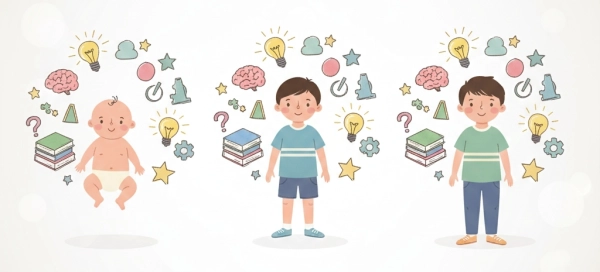
Common reasons for changes in scores include:
- Natural cognitive and neurological development
- Increased exposure to learning opportunities
- Greater familiarity with test formats and instructions
- Emotional state, motivation, or confidence on test day
- Physical factors such as fatigue, illness or stress
These fluctuations explain why experts caution parents against overinterpreting a single score—a concern often raised in should parents be concerned about their child’s IQ.
Factors That Can Influence Test Results
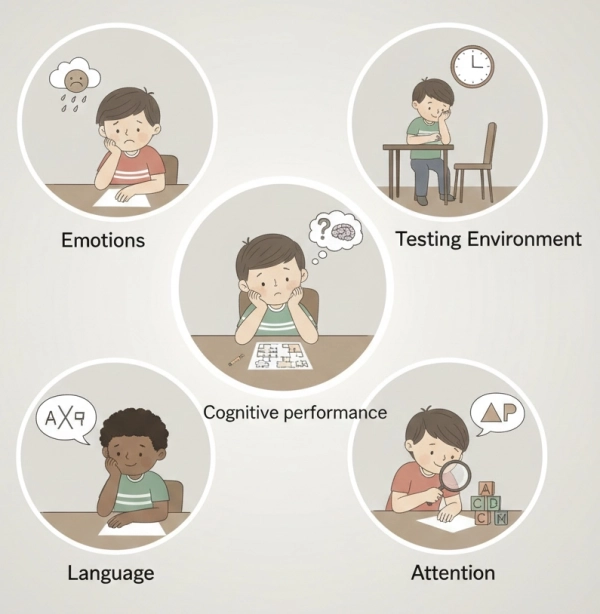
IQ test performance is affected by more than cognitive ability alone. Several non-intellectual factors can influence results, including:
- Attention span and focus during testing
- Anxiety, nervousness, or unfamiliar environments
- Language background and vocabulary exposure
- Cultural familiarity with test materials
- Comfort level with adults or structured testing situations
These influences are explored further in factors affecting IQ test results, reinforcing why results should always be interpreted with care.
What IQ Tests Do Not Measure
While IQ tests assess certain mental skills, they do not capture many essential aspects of a child’s potential. They do not measure:
- Creativity or imagination (IQ vs creativity).
- Emotional intelligence or self-awareness (emotional intelligence and self-awareness).
- Social skills or communication ability
- Motivation, curiosity, or resilience
- Artistic, athletic, or practical talents
Many children show exceptional abilities in areas that fall completely outside standardized testing, including those highlighted in signs of high intellectual potential in children.
Should Parents Be Concerned About IQ Scores?
In most cases, parents do not need to be concerned about an IQ score on its own. A score is simply one piece of information—not a judgment about a child’s value or future.
Healthy ways for parents to approach IQ results include:
- Focusing on growth and development rather than comparison
- Using insights to support learning, not limit expectations
- Discussing results with educators when appropriate
- Encouraging effort, confidence and curiosity
This perspective aligns with broader discussions such as can someone with a low IQ be successful.
Are IQ Tests Predictive of Future Success?
IQ scores alone are limited predictors of future academic or life success. Research consistently shows that factors such as:
- Quality of education
- Emotional well-being
- Family and school support
- Personal interests and motivation
- Persistence and problem-solving skills play a much stronger role in shaping outcomes than IQ scores by themselves.
Many children thrive when given encouragement and opportunities, regardless of test scores. For practical guidance, parents may also find value in how to support a child with below-average IQ.
How Parents Can Best Support Their Child
Regardless of IQ test results, parents can support their child’s development by:
- Encouraging curiosity and a love of learning
- Providing a stable, supportive home environment
- Recognizing and nurturing individual strengths
- Avoiding labels or pressure based on test scores
- Celebrating effort, progress, and personal interests
Every child develops at their own pace and in their own way. When parents focus on understanding, encouragement, and opportunity, children are far more likely to thrive—both academically and personally.
The Bottom Line
IQ testing for kids can offer useful insights into certain cognitive skills, but it does not define intelligence, potential, or worth. For parents, the most important perspective is balance.
When viewed thoughtfully and used alongside other observations and assessments, IQ tests can support understanding and learning. When overemphasized, they risk overlooking the many abilities and qualities that help children grow, learn, and succeed.
A child’s future is shaped far more by opportunity, encouragement, and experience than by any single number.

Comments
Share Your Thoughts