Brain games aren’t just a fun way to keep kids busy — they’re powerful tools that strengthen developing minds. During childhood, the brain builds the foundations for memory, attention, problem-solving, and creativity. Whether your child loves puzzles, strategy games, or hands-on challenges, the right brain games can boost confidence, support learning, and unlock hidden potential. In this guide, you’ll discover the best cognitive-boosting games for kids — and why they play a crucial role in shaping smarter, more resilient thinkers.
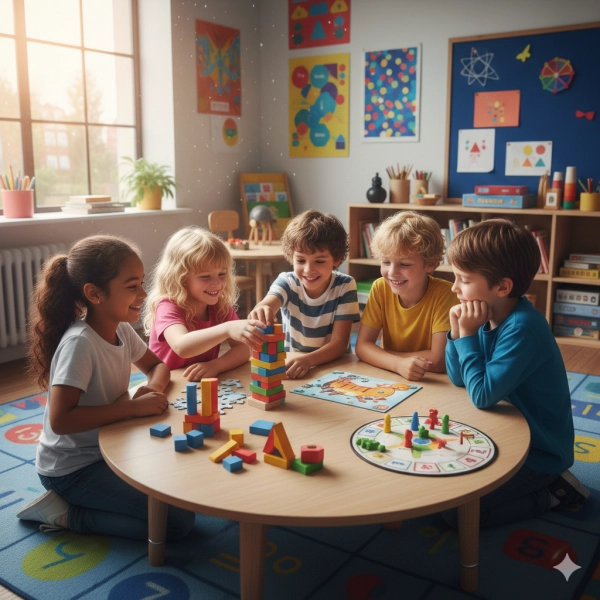
Why Brain Games Matter for Kids
Childhood is a period of rapid cognitive growth. Between the ages of 5 and 12, children experience major expansions in neural connections, executive function, and mental flexibility. For a broader look at how emotional and cognitive skills evolve during this stage, see our guide on IQ vs EQ in childhood.
When thoughtfully selected, brain games strengthen working memory, focus and attention span, visual-spatial reasoning, logical thinking, pattern recognition, and mental flexibility. These activities feel like play, so kids stay engaged while building crucial mental skills. For a deeper look at how thinking skills develop over time, our guide on how to improve cognitive skills is worth reading.
What Makes a Good Brain Game?
Not all brain games are equally effective. A high-quality brain game for kids is age-appropriate and visually engaging, encourages strategic thinking and experimentation, requires memory, logic, or multi-step reasoning, offers increasing difficulty levels to support growth, and promotes “try again” behaviour and resilience. If you’re wondering whether IQ can be improved during childhood, see our guide on supporting a child’s cognitive development.
Pattern Puzzles & Logic Games
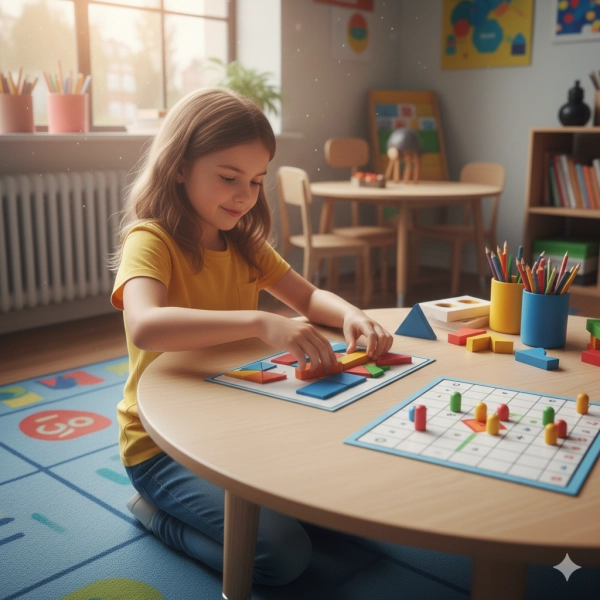
1. Tangrams
One of the oldest and most effective visual-spatial puzzles, Tangrams require kids to arrange geometric pieces into specific shapes. They strengthen mental rotation skills, creative problem-solving, shape recognition, and spatial reasoning — making them especially helpful for visual thinkers and early STEM learners. To learn more about this learning style, see our guide on Is your child a visual thinker?
2. Rush Hour (Logic Game)
Rush Hour challenges children to slide cars on a grid to free a trapped vehicle. It builds sequential planning, deductive reasoning, and patience. Kids enjoy the “escape puzzle” theme while quietly sharpening their logic.
Memory Games
1. Matching Card Games
Memory-matching cards remain popular because they’re simple, fast, and highly effective. They improve visual memory, attention span, concentration, and pattern recall — ideal for younger children and can be played alone or with family.
2. Simon Says (Electronic Version)
The modern electronic Simon Says requires kids to repeat sequences of lights and sounds. This strengthens auditory and visual memory, processing speed, and reaction time. The escalating difficulty keeps kids engaged and excited to beat their previous scores.
Math & Number Games
1. Math Dice Jr.
In this fast-paced math game, kids roll dice to create equations that reach a target number. It develops mental math, number sense, and flexible thinking. Because it feels like a race or challenge, it removes the pressure often associated with math practice.
2. Sudoku for Kids
Sudoku puzzles for children use symbols, colours, or simpler grids to teach logic. Benefits include pattern recognition, deductive reasoning, and focus. It’s a great introductory logic game that grows with a child’s ability. These skills are core elements of many IQ tests for kids.
Language & Word Games
1. Word Ladder
Word Ladder games challenge kids to transform one word into another by changing a single letter at each step. They build vocabulary, spelling accuracy, and creative thinking, encouraging kids to see language as a puzzle rather than a chore.
2. Boggle Jr. / Scrabble Jr.
These classic games introduce early literacy skills through letter recognition, word formation, and phonics. They help with reading readiness, vocabulary growth, and letter-sound association — perfect for emerging readers.
Strategy Games
1. Chess
Chess is one of the most powerful brain-training activities available. Even children as young as five can learn the fundamentals. Benefits include strategic planning, pattern recognition, multi-step thinking, patience, and foresight. Playing chess regularly is strongly linked to improved math and problem-solving skills. These abilities closely relate to those assessed in verbal and nonverbal intelligence tests.

2. Penguin Trap Game
This engaging game involves breaking ice blocks strategically without letting the penguin fall. It develops cause-and-effect reasoning, hand-eye coordination, and fast decision-making — and it’s simple, social, and perfect for family play.
Digital Brain Game Apps for Kids
Screen time can be productive when used wisely. These expert-approved apps combine play with cognitive development: Osmo Genius Kit (blends hands-on play with digital feedback), Prodigy Math Game (gamified math practice in an adventure format), Thinkrolls (physics puzzles that build logic), LogicLike (visual IQ games for reasoning and memory), and BrainPOP Games (educational mini-games on multiple subjects). These apps offer colourful visuals and reward systems that keep kids motivated while practising key skills.
Bonus: Outdoor Brain Games
Cognitive growth doesn’t always mean sitting still. Scavenger hunts build memory and observation skills; Simon Says outdoors boosts listening and processing speed; and obstacle courses encourage planning and motor coordination. Physical activity has a well-documented positive effect on brain development and cognitive performance in children — something worth incorporating alongside tabletop or digital games.
How Often Should Kids Play Brain Games?
Just 15–30 minutes a day of brain-challenging games can lead to noticeable cognitive gains. Rotate between types (logic, memory, math, word games), play with your child to turn it into quality bonding time, and encourage retrying and improvement rather than just winning. Consistency matters more than intensity — short daily sessions outperform occasional marathon sessions.
Final Thoughts
Brain games aren’t about pushing kids to become geniuses — they’re about giving them the tools to grow, explore, and thrive. When learning feels like play, children engage more deeply and retain more of what they practise.
If you’re curious about your child’s strengths, try our IQ Test for Kids — no reading required, just pure thinking fun. And for more resources on child cognitive development, browse our full Parents & Kids guide collection.

Comments
Share Your Thoughts