IQ tests are designed to measure general cognitive ability, not memorised knowledge. While IQ is relatively stable, how you prepare before an IQ test can meaningfully affect your performance. Preparation will not change your underlying intelligence, but it can help you avoid unnecessary score reductions caused by fatigue, anxiety, or unfamiliarity with test formats.
Below are scientifically supported ways to prepare for an IQ test and perform at your true cognitive level.
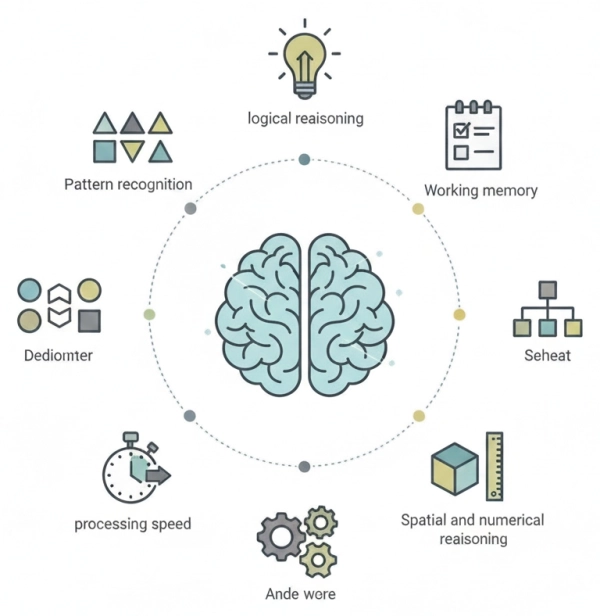
Understand What an IQ Test Measures
Most modern IQ tests assess specific cognitive abilities rather than general knowledge. For a complete conceptual foundation, see what IQ is and how it’s defined. These tests typically measure logical and abstract reasoning, pattern recognition and rule detection, working memory (the ability to hold and manipulate information briefly), processing speed, and spatial and numerical reasoning. Differences between verbal and nonverbal intelligence can also affect how people experience these tests (see verbal and nonverbal tests of intelligence). IQ tests are highly structured and time-limited — they evaluate how efficiently you process information under pressure, not creativity, motivation, or emotional regulation. This distinction is essential, especially when comparing IQ vs EQ and their roles in performance. Understanding what is — and is not — being measured allows you to prepare intelligently by optimising attention, clarity, and problem-solving efficiency rather than attempting to “study” content.
Get Adequate Sleep Before the Test
Sleep has one of the strongest and most scientifically validated effects on cognitive performance. Even mild sleep deprivation can significantly reduce performance on tasks involving reasoning, memory, and attention. It negatively affects working memory capacity, sustained attention and focus, processing speed, and accuracy in reasoning tasks. Aim for 7–9 hours of high-quality sleep the night before your IQ test, going to bed at a reasonable time and avoiding stimulants such as caffeine late in the evening. Sleep supports cognitive flexibility and problem-solving — abilities closely related to reasoning efficiency, as discussed in IQ vs critical thinking.

Eat a Balanced Meal (But Avoid Heavy Foods)
Nutrition plays a subtle but important role in cognitive performance. Your brain relies on a steady supply of glucose to function efficiently, but large fluctuations in blood sugar can impair focus and mental stamina. Best practices include eating a light, balanced meal 1–2 hours before the test, including protein and complex carbohydrates for sustained energy, avoiding excessive sugar (which can lead to energy crashes), and skipping heavy or greasy foods that cause sluggishness. Hydration is equally important — even mild dehydration has been shown to reduce attention, working memory, and processing speed. Drink water before the test, but avoid excessive intake that could cause discomfort.
Manage Anxiety and Stress Effectively
Anxiety is one of the most common non-cognitive factors that lowers IQ test performance. Stress consumes working memory resources and disrupts focus. This effect is well documented in research on emotional intelligence and self-regulation, where unmanaged stress interferes with reasoning even in highly intelligent individuals (see emotional intelligence and self-awareness). Effective strategies include slow controlled breathing, brief mindfulness or grounding exercises, and reframing anxiety as alertness rather than threat. Anxiety is not a measure of intelligence — but it can temporarily suppress cognitive performance if left unchecked.
Familiarise Yourself With Common Question Types
IQ tests do not reward memorisation, but familiarity with common formats reduces unnecessary cognitive load. Typical question types include pattern completion and matrix reasoning, verbal and visual analogies, number sequences, spatial rotation tasks, and abstract symbol reasoning. Exposure to representative questions helps you recognise structures faster and focus on solving rather than decoding instructions. This is especially useful for online formats, where unfamiliar layouts can affect pacing.
Practise Working Under Time Constraints
Many IQ subtests are intentionally speed-limited. Even individuals with strong reasoning skills can lose points if they spend too much time on a single difficult question. Effective time-management strategies include practising with a timer to build pacing awareness, learning to skip difficult questions and return later, and avoiding perfectionism — partial progress is better than stagnation. Speed and accuracy both matter. Strategic decision-making under time pressure can significantly improve overall performance without changing your underlying ability.

Optimise Your Test Environment
External distractions can have a measurable negative effect on cognitive performance. Noise, poor lighting, or physical discomfort can drain mental energy and reduce focus. Before the test, try to ensure a quiet interruption-free environment, comfortable seating and posture, and adequate lighting and screen clarity for digital tests. Reducing environmental stressors helps preserve attention and mental stamina throughout the test.
Avoid Cramming or Overtraining
Excessive practice immediately before an IQ test can lead to mental fatigue, which impairs reasoning and processing speed. Instead, practise lightly several days in advance, avoid intensive sessions on the day of the test, and allow your mind to rest and reset. Mental freshness often produces better results than additional exposure. If you test repeatedly without adequate recovery between sessions, scores can be distorted by fatigue rather than reflecting genuine ability.
Do Not Overinterpret Individual Questions
IQ tests are designed so that no one answers every question correctly. Encountering difficult or confusing items is normal. If you face a challenging question, skip it temporarily, move on without frustration, and return only if time allows. Fixating on a single item can cost multiple points elsewhere — one of the most common and avoidable mistakes test-takers make.
What Preparation Can and Cannot Do
Effective preparation can reduce anxiety, improve focus and mental efficiency, and prevent avoidable mistakes and time loss. However, preparation cannot dramatically change your underlying IQ or turn average intelligence into exceptional intelligence. The purpose of preparation is to help you perform at your true ability level, not to artificially inflate results. A well-prepared test-taker simply removes obstacles that interfere with clear thinking. Ultimately, the best IQ test preparation is about optimising conditions — mental, physical, and emotional — so your cognitive abilities can function at their best.
Final Thoughts
Preparing for an IQ test is about removing obstacles, not changing who you are. By prioritising sleep, nutrition, stress management, and familiarity with test formats, you can ensure that your score reflects your actual cognitive ability rather than preventable factors. The smartest approach to an IQ test is not overthinking — it’s showing up rested, calm, and focused. Explore more in our Blog.

Comments
Share Your Thoughts