IQ and Mental Health: What the Research Shows — The Conflicted Evidence, the Sampling Problem, and What the Best Studies Actually Find

Updated: Jun 19, 2026

The relationship between IQ and mental health is one of the most contested topics in the psychological literature — and the research findings genuinely conflict with each other in ways that reflect real methodological differences rather than simple disagreement.

Ask one set of researchers, and they will tell you that higher IQ is associated with better mental health outcomes. Ask another, and they will cite elevated rates of anxiety, mood disorders, and ADHD in high-IQ populations. Both sets of researchers are reading real data. The discrepancy lies in which people they are studying — and understanding this sampling distinction is the key to making sense of the literature.

This guide covers what the research actually shows across the IQ spectrum: the large population-based findings that tend to show IQ as a modest protective factor, the high-IQ specific findings from Mensa and gifted studies that show elevated rates of certain conditions, the important caveat about sampling bias, what we know about specific psychiatric conditions and their relationship to cognitive ability, and what this means practically for people at any IQ level.

A note before proceeding: if you are currently experiencing mental health difficulties, this guide provides research information — it is not a substitute for professional support. Mental health challenges affect people across the full IQ spectrum, and effective help is available regardless of cognitive level.

Diagram explaining why research on IQ and mental health shows conflicting results due to different study populations and sampling methods

Why the Research Conflicts: The Sampling Problem

The apparent contradiction in the IQ-mental health literature can be understood through one key distinction: the difference between population-based studies and studies specifically focused on high-IQ groups.

Population-based studies draw random or representative samples from the general population and measure the relationship between cognitive ability and mental health outcomes across the full distribution. The most rigorous recent example is Williams et al. (2022), published in European Psychiatry, which used UK Biobank data involving thousands of participants. This study found that higher intelligence was associated with better mental health outcomes — specifically, less anxiety, less PTSD, less depression, and less neuroticism compared to lower-IQ groups. A 2023 study in the Journal of the American Academy of Child and Adolescent Psychiatry (Raznahan et al.) similarly found that IQ shows the strongest negative relationship with attentional and social impairments — meaning lower IQ is associated with more of these difficulties — while being "largely unrelated to anxiety, mood, and psychopathy" at the population level.

High-IQ specific studies survey members of Mensa or participants in gifted education programmes and compare their self-reported mental health outcomes to general population norms. These studies tend to find elevated rates of certain conditions — one Mensa-focused survey found approximately 20% of members reported a diagnosed anxiety disorder, compared to roughly 10% in the general population. However, these studies face a critical methodological problem: Mensa members are not a random sample of high-IQ people. They represent people who are aware of their IQ, motivated to join an IQ-based organisation, and willing to participate in surveys about their mental health. This self-selection may systematically over-represent people who are experiencing psychological difficulties — people who turned to Mensa partly because of social difficulties or a need for intellectual community that mainstream settings did not provide.

The 2022 Williams et al. study explicitly noted that "previous research showing elevated mental health problems in high-IQ samples suffered from misrepresentative sampling methods." Their large population-based approach found the opposite direction of effect.

IQ Across the Mental Health Spectrum: What We Know

Overview showing mental health associations across the IQ spectrum from lower IQ to higher IQ with different patterns for different conditions

Setting aside the high-IQ specific debate, the broader picture of how cognitive ability relates to mental health across the full IQ spectrum is clearer in some respects:

Lower IQ and mental health. The most consistent findings in the IQ-mental health literature concern lower cognitive ability. Lower IQ is consistently associated with higher rates of attentional and social impairments (ADHD, autism spectrum conditions), elevated depression risk particularly in the context of socioeconomic adversity, and higher vulnerability to mental health challenges in general. The mechanisms are plausible: lower cognitive ability limits access to mental health information, reduces the effectiveness of certain cognitive coping strategies, is associated with lower educational attainment and income (themselves risk factors for mental health difficulties), and may reduce access to treatment resources. Intellectual disability specifically is associated with very high psychiatric comorbidity rates.

The borderline IQ range (IQ 70–85), covered in our borderline IQ guide, is associated with elevated anxiety and depression as secondary consequences of chronic difficulty navigating a world designed for average cognitive ability — not as direct effects of the cognitive level itself.

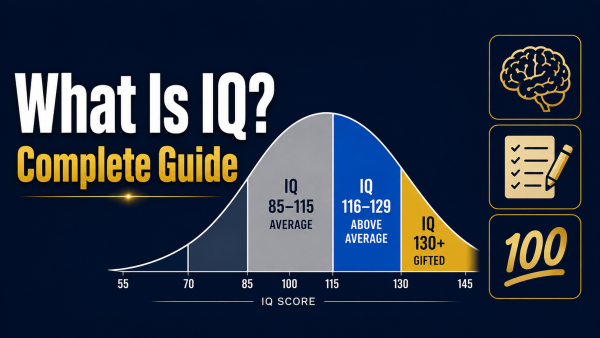
Average IQ and mental health. In the average cognitive range (IQ 85–115), which contains approximately 68% of the population, IQ is largely unrelated to the probability of experiencing any given psychiatric condition. Mental health difficulties affect this range as much as any other — depression, anxiety, and other conditions are distributed throughout the central IQ band and are not meaningfully predicted by small differences in IQ within this range.

Higher IQ and mental health. As discussed above, the evidence is genuinely conflicted here. Large population studies suggest modest protective effects for most conditions. Gifted-specific studies suggest elevated rates of some conditions. The honest answer is that the relationship is uncertain and depends substantially on life circumstances, support systems, and the specific conditions being considered.

IQ and Specific Mental Health Conditions

Table showing research findings on IQ and specific mental health conditions including depression anxiety ADHD schizophrenia and bipolar disorder

Depression

The IQ-depression relationship is mixed and depends heavily on the study population. A 2009 study found that higher childhood IQ was associated with reduced risk of PTSD, anxiety, and social phobia in adulthood. However, other research finds elevated depression rates in gifted samples. The 2022 Williams et al. study using UK Biobank data found no elevated depression rates in higher-IQ individuals — and in fact found less neuroticism. The methodologically strongest evidence suggests that higher IQ is not reliably a risk factor for depression and may be modestly protective through socioeconomic and coping mechanism pathways.

Anxiety Disorders

Anxiety shows the most consistently elevated rates in high-IQ specific samples. Mensa research reports approximately twice the general population prevalence of anxiety disorders in members. Plausible mechanisms include: overthinking and rumination (advanced pattern recognition amplifying threat detection), perfectionism, heightened sensitivity to uncertainty, and existential preoccupations more common in highly analytical minds. However, the population-based Williams et al. study found less anxiety in higher-IQ groups — suggesting that the elevated rates in Mensa samples may reflect sampling bias rather than a general phenomenon.

ADHD

ADHD and IQ have a complex bidirectional relationship. ADHD itself reduces measured IQ by approximately 10–15 points through its effects on attention, processing speed, and working memory — so co-occurring ADHD and high IQ produce a testing situation where the "true" IQ and the "measured" IQ may diverge substantially. Lower IQ is consistently associated with higher ADHD co-occurrence. In gifted samples, ADHD co-occurrence may be elevated and may be particularly difficult to identify because intellectual gifts can mask attentional difficulties in structured academic environments. For more on how ADHD affects cognitive measurement, see our WAIS-IV guide.

Schizophrenia and Psychosis

Schizophrenia and severe psychotic disorders are reliably associated with lower cognitive ability — not higher. The cognitive declines associated with psychosis, and the neurodevelopmental factors that predict it, tend to push measured IQ downward. High IQ is not an elevated risk factor for schizophrenia — the direction of the relationship runs the other way.

Bipolar Disorder

Some studies have found associations between higher IQ, creativity, and bipolar disorder. However, the evidence is inconsistent and methodologically limited. A 2025 systematic review on gifted individuals' mental health noted that the scientific data on this subject "suffer from several methodological limitations." The relationship between creativity, elevated mood states, and cognitive ability is complex and not reducible to a simple IQ-bipolar correlation.

PTSD

Higher IQ appears to be a modest protective factor against PTSD, documented in multiple studies. Possible mechanisms include better cognitive processing of traumatic experiences, greater access to trauma-informed coping strategies, and higher socioeconomic resources enabling access to treatment following traumatic events.

Psychological Challenges Specific to High IQ: What's Plausible

Overview of psychological challenges specifically associated with high intelligence including overthinking perfectionism and social misfit

Even setting aside the conflicted empirical evidence, there are plausible psychological mechanisms through which high cognitive ability could create specific mental health vulnerabilities in some individuals:

Overthinking and rumination. Advanced pattern recognition and analytical capacity, applied to internal emotional experience rather than external problems, may amplify worry cycles and rumination. The same cognitive machinery that excels at tracking complex problems can become a liability when turned persistently inward on perceived threats or uncertainties.

Perfectionism. High intellectual standards can extend to self-evaluation — the tendency toward excellence that characterises high performance can become self-defeating when applied without the emotional regulation that puts failure in perspective. Perfectionism is a documented risk factor for depression and anxiety, and it appears somewhat more common in high-achieving populations.

Social misfit experience. A person significantly above the cognitive average of their environment may experience social difficulty not because of interpersonal deficits but because of the challenge of finding intellectual peers and engaging meaningfully with a peer group whose interests and conversation feel unstimulating. This experience — particularly acute in childhood and adolescence — can contribute to social isolation and secondary mental health difficulties.

Existential preoccupation. Deeper engagement with questions of meaning, mortality, and uncertainty — more common in analytically capable individuals — can create anxiety that less philosophically engaged people do not experience in the same way.

These mechanisms are plausible and individually documented in the clinical literature. What is less clear is their population-level significance — whether they affect enough high-IQ individuals substantially enough to produce reliably elevated mental health rates above what is found in carefully conducted population studies.

What This Means Practically

For people at any IQ level reading this guide, several practical conclusions emerge from the evidence:

Mental health challenges are distributed across the full IQ spectrum. Depression, anxiety, and other conditions affect people at IQ 85 and at IQ 145, at IQ 105 and at IQ 130. IQ is not a reliable predictor of individual mental health outcomes, and it should not be used as a basis for assuming that a person is or is not vulnerable to mental health difficulties.

The strongest predictors of mental health outcomes are not IQ but the factors explored throughout this guide series: social connection, socioeconomic stability, adequate sleep and nutrition, meaningful work and purpose, access to mental health support when needed, and the quality of early attachment and developmental environment. For more on factors that affect cognitive and mental wellbeing, see our guides on sleep and IQ and IQ vs EQ.

If you are experiencing mental health difficulties, professional support is available and effective regardless of your IQ level. Finding the right support is more important than understanding the statistical relationship between IQ and mental health outcomes.

The relationship between IQ and mental health is genuinely conflicted in the research literature — not because the question is unanswerable but because different study designs produce different results. Large population-based studies tend to find modest protective effects of higher IQ for most psychiatric conditions. Studies specifically of high-IQ groups (Mensa, gifted programmes) find elevated rates of anxiety and mood disorders — but these studies face significant sampling bias concerns. What is clearest: lower IQ is more consistently associated with elevated psychiatric comorbidity than higher IQ is. What is most uncertain: whether the elevated anxiety and mood disorder rates in self-selected high-IQ samples reflect a genuine effect of high intelligence or an artefact of who joins Mensa and responds to surveys.

For related guides, see our discussion of IQ vs EQ, our guide on borderline IQ and support, and our guide on what IQ actually measures. If you need mental health support, please reach out to a qualified professional or contact a mental health helpline in your country.

Frequently Asked Questions

Does high IQ cause mental health problems?

Not clearly. Large population studies (Williams et al., 2022, UK Biobank) found higher IQ associated with better mental health outcomes — less anxiety, less depression, less PTSD. Studies specifically of Mensa members find elevated anxiety and mood disorder rates, but these likely reflect sampling bias. High IQ does not appear to reliably cause mental health problems; specific challenges (perfectionism, rumination, social misfit) may elevate risk in some individuals without being universal.

Is there a link between low IQ and mental health problems?

Yes — lower IQ is more consistently associated with mental health challenges, particularly attentional and social impairments (ADHD, ASD), depression in the context of socioeconomic adversity, and reduced access to mental health resources and support. Intellectual disability specifically carries very high psychiatric comorbidity rates.

Are gifted people more likely to have depression?

The evidence is inconsistent. Some gifted/Mensa samples show elevated mood disorder rates; large population studies show the opposite. A 2025 systematic review noted the data on gifted mental health "suffers from several methodological limitations." The honest answer: gifted individuals face specific psychological challenges (perfectionism, social misfit, existential concerns) that can elevate risk — but high IQ per se is not reliably a cause of depression.

What mental health conditions are associated with high IQ?

Studies of high-IQ populations have found elevated rates of anxiety disorders, ADHD co-occurrence, and OCD. Schizophrenia and severe psychosis are associated with lower IQ, not higher. The evidence for mood disorders in high-IQ groups is mixed.

Does IQ protect against mental health problems?

Higher IQ appears to be a modest protective factor in large population studies — particularly against PTSD, anxiety, and neurotic tendencies — possibly through better coping resources, greater socioeconomic stability, and more effective access to mental health information and treatment. This protective effect is modest and does not apply uniformly to all conditions.

David Johnson - Founder of CheckIQFree

About the Author

David Johnson is the founder of CheckIQFree. With a background in Cognitive Psychology, Neuroscience, and Educational Technology, he holds a Master’s degree in Cognitive Psychology from the University of California, Berkeley.

David has over 10 years of experience in psychometric research and assessment design. His work references studies such as Raven’s Progressive Matrices and the Wechsler Adult Intelligence Scale (WAIS) .

Comments

R
Rivaldo 4 months ago
I agree with most points, but I feel that people sometimes overemphasize IQ. I’ve met many highly successful people who probably don’t score above 120.
A
Alaya 4 months ago
How stable is an IQ score around 125 over time? If someone takes the test again after years of learning, does it usually change much?
D
David Johnson 4 months ago
Great question. While core IQ tends to remain relatively stable, functional intelligence can improve significantly through learning, problem-solving practice, and emotional development…
A
Ayush 4 months ago
I took an online IQ test last year and scored 124. Reading this article actually helped me understand why I often feel comfortable with complex problems but still struggle socially sometimes. The section about EQ really resonated with me.

Share Your Thoughts