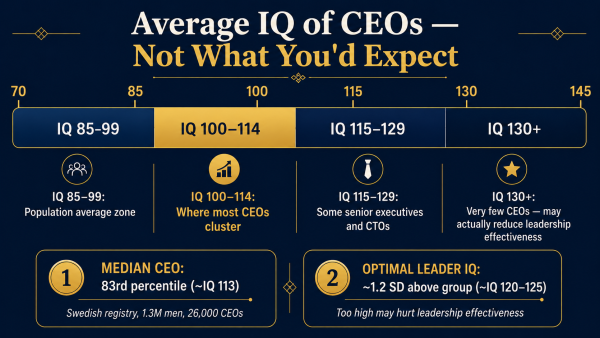
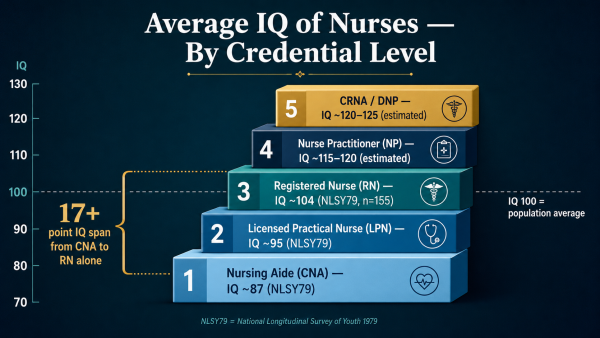
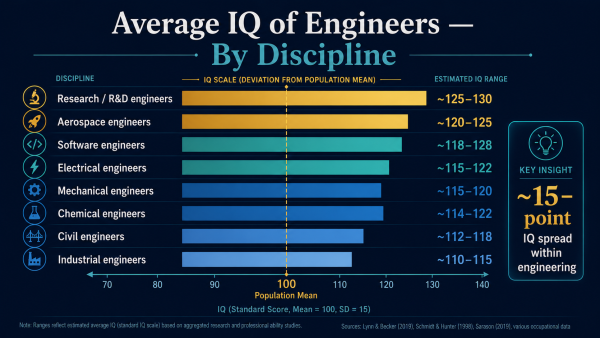
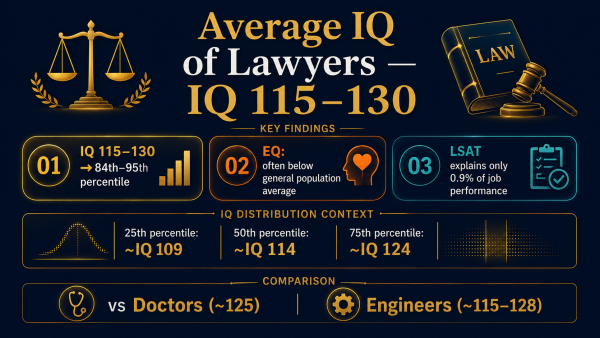
How much does intelligence actually matter in your career? The answer depends heavily on the field, the role, and how you define intelligence in the first place. IQ — a measure of general cognitive ability including logical reasoning, pattern recognition, and processing speed — correlates meaningfully with job performance in many professions, particularly those involving complex analysis or rapid learning. But it is far from the only factor that determines who succeeds.
Research consistently shows that emotional intelligence (EQ), work ethic, communication skills, and domain expertise often matter as much as — or more than — raw cognitive ability. Some careers reward structured analytical thinking almost exclusively. Others depend far more on empathy, leadership, and interpersonal judgment. And many of the most successful professionals hold neither the highest IQ nor the most prestigious credentials — they simply know how to apply their strengths consistently.
This collection of articles examines the real relationship between IQ and career outcomes. Whether you are exploring which roles align with your cognitive profile, wondering how recruiters use IQ tests, or looking for evidence that average intelligence is enough to build a meaningful career, you will find research-grounded, practical answers here.